
关键信息
-
基因名
B7-1/CD80
-
简介
B7-1/CD80 Protein, Human (HEK293, Fc) is a polypeptide chain with the C-termimal human IgG1 Fc fragment produced in HEK293 cells. CD80 is a costimulatory molecule known for its role in T-cell activation and also in regulating normal and malignant B cellsactivity.
- 应用
-
别名
rHuB7-1/CD80, Fc Chimera; BB1; CD28LG; CD28LG1; LAB7
-
种属
Human
-
表达系统
HEK293
-
标签
C-hFc
-
纯度
Greater than 90% as determined by SDS-PAGE.
-
蛋白编号
P33681-1
-
表达区间
V35-N242
-
氨基酸序列
VIHVTKEVKEVATLSCGHNVSVEELAQTRIYWQKEKKMVLTMMSGDMNIWPEYKNRTIFDITNNLSIVILALRPSDEGTYECVVLKYEKDAFKREHLAEVTLSVKADFPTPSISDFEIPTSNIRRIICSTSGGFPEPHLSWLENGEELNAINTTVSQDPETELYAVSSKLDFNMTTNHSFMCLIKYGHLRVNQTFNWNTTKQEHFPDN
-
蛋白长度
Extracellular Domain
-
分子量
73-85 kDa.
-
内毒素
< 1.0 EU per μg protein as determined by the LAL method.
-
性状
Freeze-dried powder
-
缓冲液
PBS, pH7.4, containing 0.01% SKL, 1mM DTT, 5% Trehalose and Proclin300.
-
复溶方法
Reconstitute in ddH2O to a concentration of 0.1-0.5 mg/mL. Do not vortex.
- 个性化定制
-
稳定性测试
The thermal stability is described by the loss rate. The loss rate was determined by accelerated thermal degradation test, that is, incubate the protein at 37℃ for 48h, and no obvious degradation and precipitation were observed. The loss rate isless than 8% within the expiration date under appropriate storage condition.
-
保存条件 & 期限
Samples are stable for up to twelve months from date of receipt at -20℃ to -80℃. Store it under sterile conditions at -20℃ to -80℃. It is recommended that the protein be aliquoted for optimal storage. Avoid repeated freeze-thaw cycles.
-
运输条件
In general, recombinant proteins are supplied as lyophilized powder and shipped at ambient temperature. For bulk packages, the proteins are provided as frozen liquid and shipped with blue ice, unless otherwise requested by the customer.
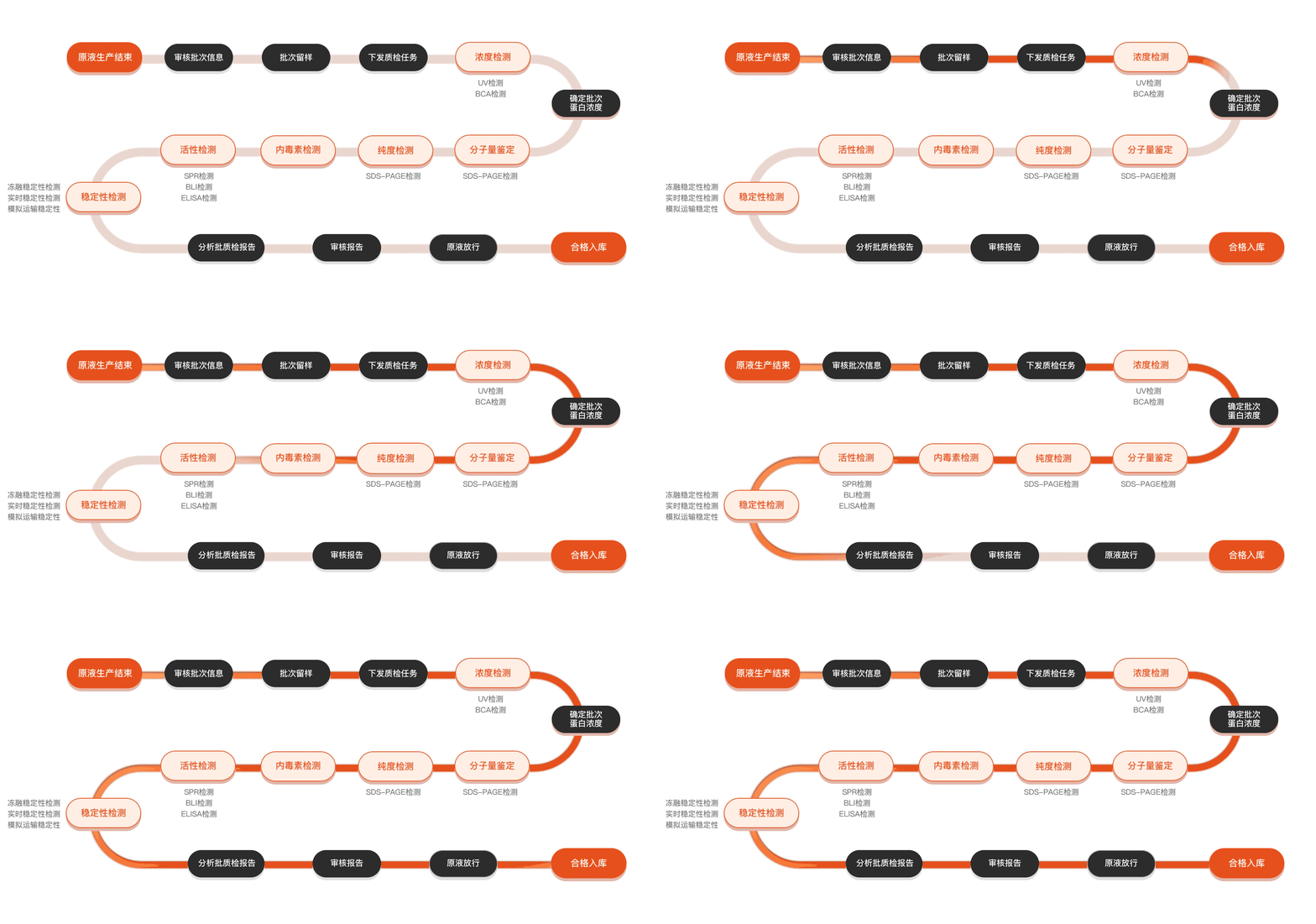
质检流程
相关产品
Recombinant Human CD83 Protein(HEK293), His
Cat:IPD-X21028
Recombinant Human CD74 Protein(HEK293), His
Cat:IPD-X18962
背景信息
B7-1/CD80 is a crucial costimulatory molecule that plays a significant role in the regulation of T cell activation and immune response. It is expressed on the surface of antigen-presenting cells (APCs) and binds to CD28 and CTLA-4 on T cells, thereby influencing their proliferation and differentiation. The importance of the B7-1/CD80 pathway in immune modulation has been recognized in various contexts, including cancer immunotherapy, autoimmunity, and infectious diseases. Research has shown that enhancing B7-1/CD80 interactions can provide a robust activation signal to T cells, making it a potential target for therapeutic strategies aimed at boosting anti-tumor immunity or reversing T cell tolerance in chronic infections. Additionally, the recombinant form of B7-1/CD80 has been developed to better understand its functional properties and mechanisms of action. This includes structural studies and functional assays that aim to dissect the complex interactions between B7-1/CD80 and its receptors. By exploring these molecular dynamics, scientists hope to uncover new insights that can lead to improved immunotherapeutic approaches, as well as better management of immune-related disorders. The continued investigation into B7-1/CD80 not only enhances our fundamental understanding of immune regulation but also holds promise for the development of innovative interventions in the fields of immunology and oncology.