
关键信息
-
基因名
LR3 IGF-I/IGF-1
-
简介
The LR3 IGF-I/IGF-1 protein is similar to insulin and has potent growth-promoting activity that exceeds the efficacy of insulin. As a potential physiological regulator, it stimulates glucose transport and glycogen synthesis in osteoblasts even at significantly lower concentrations than insulin. LR3 IGF-I/IGF-1 Protein, Human (83a.a, E51R) is the recombinant human-derived LR3 IGF-I/IGF-1 protein, expressed by E. coli , with tag free and E51R mutation.
- 应用
-
生物活性
Measured in a cell proliferation assay using MCF-7 cells. The ED50 for this effect is 0.38-2.174 ng/mL. Measured in a cell proliferation assay using MCF-7 cells. The ED50 for this effect is 0.3840 ng/mL, corresponding to a specific activity is 2.60×10⁶ units/mg.
-
别名
Long R3 IGF-I; Insulin-like growth factor I; MGF; Somatomedin-C; IBP1
-
种属
Human
-
表达系统
E. coli
-
标签
Tag Free
-
纯度
Greater than 95% as determined by reducing SDS-PAGE.
-
蛋白编号
P05019-1 (G49-A118, E51R, with a 13 amino acid extension peptide
-
表达区间
MFPAMPLSSLFVN) at the N terminal
-
蛋白长度
Full Length of Isoform-1 Mature Protein
-
分子量
9-11 kDa
-
内毒素
< 1.0 EU per μg protein as determined by the LAL method.
-
性状
Freeze-dried powder
-
缓冲液
PBS, pH7.4, containing 0.01% SKL, 1mM DTT, 5% Trehalose and Proclin300.
-
复溶方法
Reconstitute in ddH2O to a concentration of 0.1-0.5 mg/mL. Do not vortex.
- 个性化定制
-
稳定性测试
The thermal stability is described by the loss rate. The loss rate was determined by accelerated thermal degradation test, that is, incubate the protein at 37℃ for 48h, and no obvious degradation and precipitation were observed. The loss rate isless than 8% within the expiration date under appropriate storage condition.
-
保存条件 & 期限
Samples are stable for up to twelve months from date of receipt at -20℃ to -80℃. Store it under sterile conditions at -20℃ to -80℃. It is recommended that the protein be aliquoted for optimal storage. Avoid repeated freeze-thaw cycles.
-
运输条件
In general, recombinant proteins are supplied as lyophilized powder and shipped at ambient temperature. For bulk packages, the proteins are provided as frozen liquid and shipped with blue ice, unless otherwise requested by the customer.
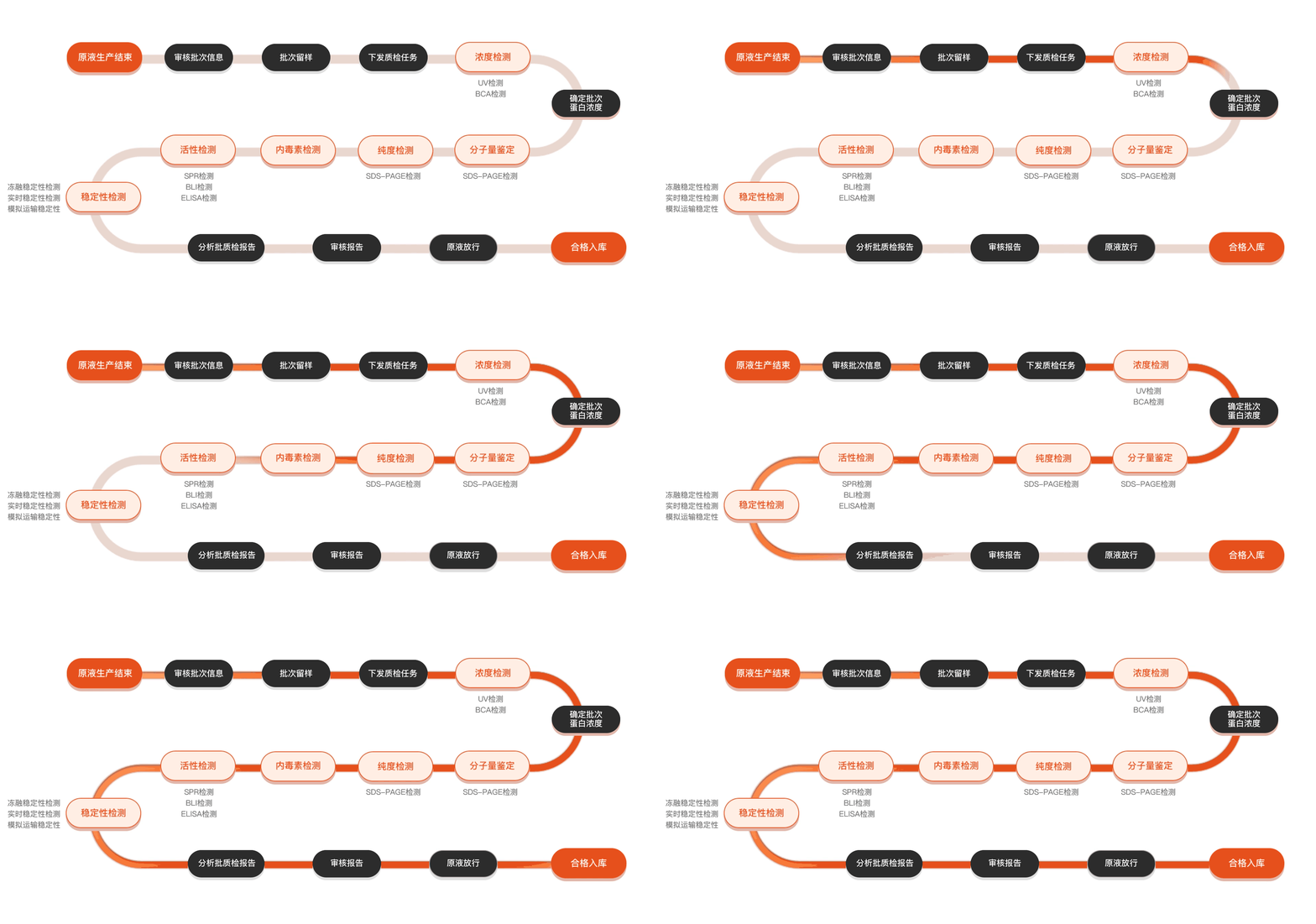
质检流程
相关产品
背景信息
LR3 IGF-I, or Long R3 Insulin-like Growth Factor I, is a recombinant protein that serves as a potent analog of the naturally occurring IGF-I. This modification enhances its biological activity and prolongs its half-life in circulation. IGF-I plays a crucial role in growth and development, influencing cellular proliferation, differentiation, and survival. It is particularly important in muscle and bone development, making it a topic of interest in various fields, including endocrinology, oncology, and sports medicine. Research on LR3 IGF-I has shown promise in treating growth disorders, muscle wasting conditions, and metabolic diseases. Moreover, its potential application in anti-aging therapies and regenerative medicine has garnered significant attention. Unlike native IGF-I, which may have a short duration of action and is susceptible to rapid clearance, LR3 IGF-I provides sustained bioactivity through its structural modifications. This unique profile of LR3 IGF-I allows for more effective therapeutic interventions and underscores the need for continued investigation into its mechanisms of action, dosage optimization, and long-term effects in clinical settings. As researchers explore its applications, understanding the pharmacokinetics, safety profile, and biological effects of LR3 IGF-I remains pivotal for leveraging its full therapeutic potential.