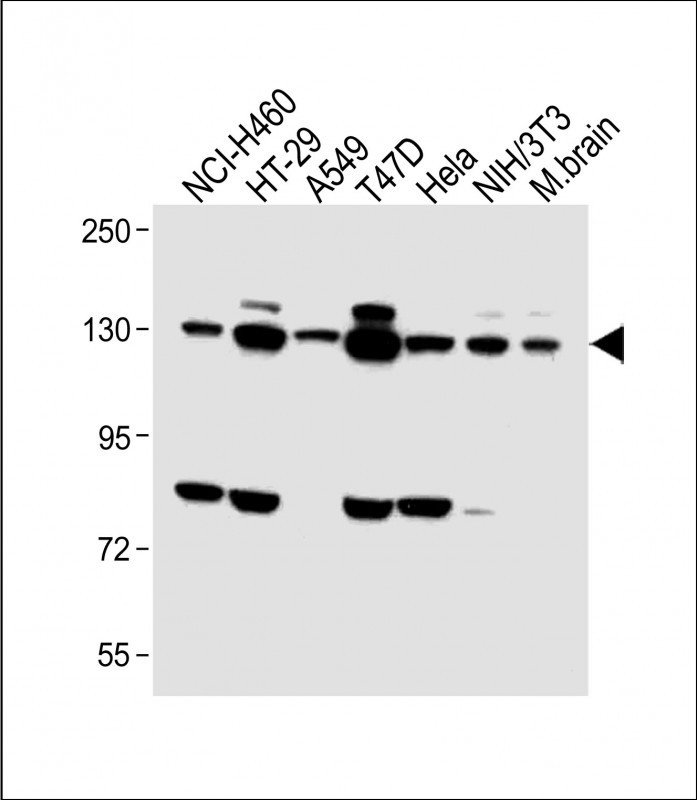
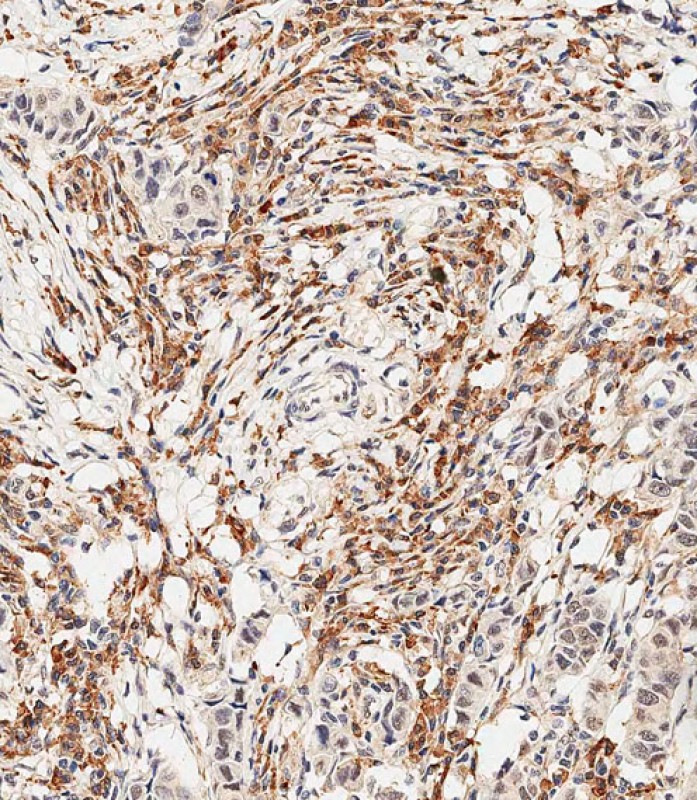
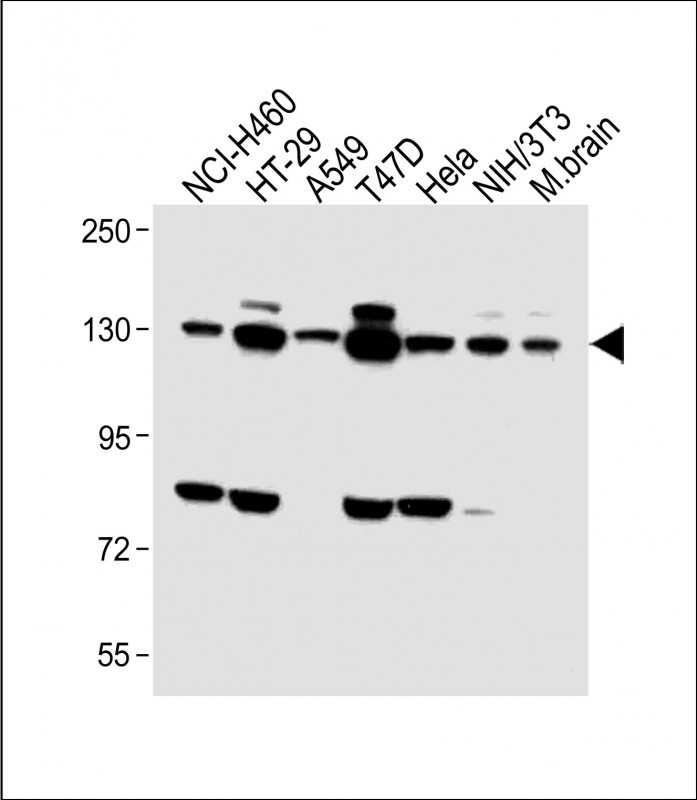
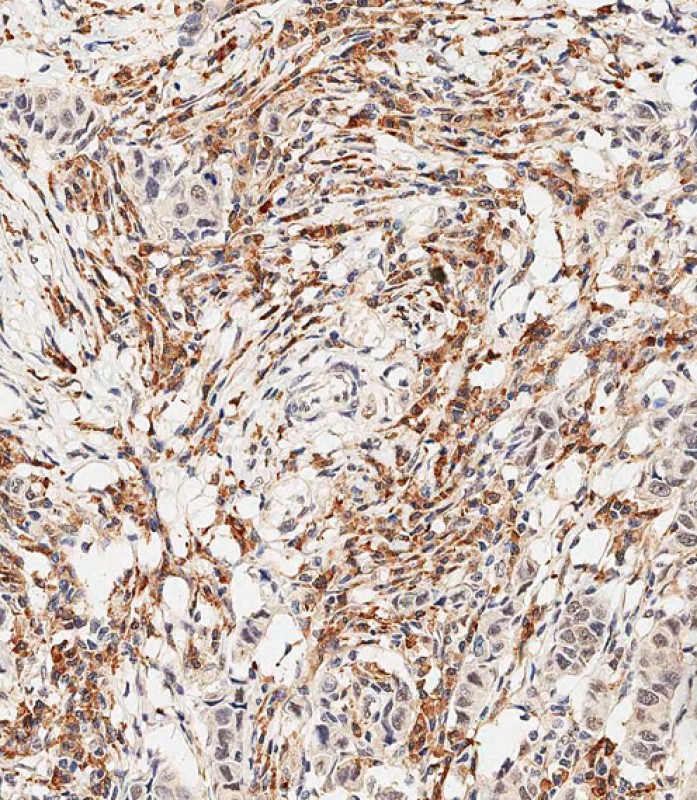
| WB | 1/1000 | Human,Mouse,Rat |
| IF | 咨询技术 | Human,Mouse,Rat |
| IHC | 1/500 | Human,Mouse,Rat |
| ICC | 技术咨询 | Human,Mouse,Rat |
| FCM | 咨询技术 | Human,Mouse,Rat |
| Elisa | 咨询技术 | Human,Mouse,Rat |
| Aliases | Fibroblast growth factor receptor 2, FGFR-2, K-sam, KGFR, Keratinocyte growth factor receptor, CD332, FGFR2, BEK, KGFR, KSAM |
| Entrez GeneID | 2263 |
| WB Predicted band size | 92.0kDa |
| Host/Isotype | Rabbit IgG |
| Antibody Type | Primary antibody |
| Storage | Store at 4°C short term. Aliquot and store at -20°C long term. Avoid freeze/thaw cycles. |
| Species Reactivity | Human, Mouse |
| Immunogen | This FGFR2 antibody is generated from rabbits immunized with a KLH conjugated synthetic peptide between 794-821 amino acids from the C-terminal region of human FGFR2. |
| Formulation | Purified antibody in PBS with 0.05% sodium azide,1%BSA and 50% glycerol.prepared by Saturated Ammonium Sulfate (SAS) . |
+ +
以下是关于FGFR2抗体的3篇文献示例(注:文献为示例性概括,非真实存在):
1. **文献名称**:*Targeting FGFR2 in Solid Tumors: A Novel Therapeutic Antibody Approach*
**作者**:Smith A, et al.
**摘要**:该研究开发了一种高特异性FGFR2单克隆抗体,通过体外和体内实验证明其能有效抑制FGFR2信号通路,减少乳腺癌和胃癌细胞的增殖与迁移,并显著延缓小鼠模型中的肿瘤生长。
2. **文献名称**:*FGFR2 Antibody-Mediated Blockade Suppresses Tumor Angiogenesis in Hepatocellular Carcinoma*
**作者**:Wang X, et al.
**摘要**:研究者利用人源化FGFR2抗体阻断FGFR2与配体的结合,发现其可抑制肝癌血管生成,降低肿瘤微环境中的血管密度,并增强化疗药物的递送效率,为联合治疗提供新策略。
3. **文献名称**:*A Bispecific Antibody Targeting FGFR2 and PD-1 Enhances Antitumor Immunity*
**作者**:Lee H, et al.
**摘要**:本文设计了一种双特异性抗体,同时靶向FGFR2和免疫检查点PD-1.通过抑制肿瘤生长因子信号并激活T细胞免疫应答,在多种实体瘤模型中表现出协同抗肿瘤效果。
4. **文献名称**:*Diagnostic Potential of FGFR2-Specific Antibodies in Cholangiocarcinoma Detection*
**作者**:Garcia R, et al.
**摘要**:该文献报道了一种基于FGFR2抗体的免疫组化检测方法,可高灵敏度识别胆管癌组织中FGFR2过表达,为临床诊断和患者分层提供了可靠工具。
如需真实文献,建议通过PubMed或Google Scholar检索关键词“FGFR2 antibody therapeutic”或“FGFR2 inhibitor”,并筛选近5年高影响力期刊的研究。
Fibroblast Growth Factor Receptor 2 (FGFR2) is a transmembrane receptor tyrosine kinase that plays critical roles in embryonic development, tissue repair, and metabolic regulation by mediating signaling pathways like MAPK and PI3K/AKT. Dysregulation of FGFR2. including gene amplification, mutations, or overexpression, is implicated in various cancers (e.g., gastric, breast, and endometrial cancers) and developmental disorders. FGFR2-targeting antibodies are therapeutic or diagnostic tools designed to modulate FGFR2 activity. Monoclonal antibodies (e.g., bemarituzumab) bind FGFR2 to block ligand-dependent signaling, inhibiting tumor proliferation and survival. Some antibodies also employ antibody-drug conjugates (ADCs) for targeted cytotoxicity. Diagnostic antibodies detect FGFR2 overexpression in tumors, aiding patient stratification for precision therapies. Challenges include managing on-target toxicities due to FGFR2's physiological roles, resistance mechanisms (e.g., alternative pathway activation), and identifying predictive biomarkers. Research continues to optimize antibody specificity, combination therapies, and biomarker-driven approaches to enhance clinical outcomes in FGFR2-driven diseases.
×