
关键信息
-
基因名
CGB7
-
简介
The CGB7 protein is the beta subunit of human chorionic gonadotropin (hCG) and is critical during pregnancy, stimulating steroid synthesis that is essential for maintaining pregnancy. As a unique β subunit, CGB7 confers hCG specificity and plays a unique role in reproductive physiology. CGB7 Protein, Human (sf9, His) is the recombinant human-derived CGB7 protein, expressed by Sf9 insect cells , with C-His labeled tag.
- 应用
-
别名
Choriogonadotropin subunit beta 7; CGB7
-
种属
Human
-
表达系统
Baculovirus
-
标签
C-His
-
纯度
Greater than 90% as determined by SDS-PAGE.
-
蛋白编号
P0DN87-1
-
表达区间
S21-Q165
-
蛋白长度
Full Length of Isoform-1 Mature Protein
-
分子量
25 kDa
-
内毒素
< 1.0 EU per μg protein as determined by the LAL method.
-
性状
Freeze-dried powder
-
缓冲液
PBS, pH7.4, containing 0.01% SKL, 1mM DTT, 5% Trehalose and Proclin300.
-
复溶方法
Reconstitute in ddH2O to a concentration of 0.1-0.5 mg/mL. Do not vortex.
- 个性化定制
-
稳定性测试
The thermal stability is described by the loss rate. The loss rate was determined by accelerated thermal degradation test, that is, incubate the protein at 37℃ for 48h, and no obvious degradation and precipitation were observed. The loss rate isless than 8% within the expiration date under appropriate storage condition.
-
保存条件 & 期限
Samples are stable for up to twelve months from date of receipt at -20℃ to -80℃. Store it under sterile conditions at -20℃ to -80℃. It is recommended that the protein be aliquoted for optimal storage. Avoid repeated freeze-thaw cycles.
-
运输条件
In general, recombinant proteins are supplied as lyophilized powder and shipped at ambient temperature. For bulk packages, the proteins are provided as frozen liquid and shipped with blue ice, unless otherwise requested by the customer.
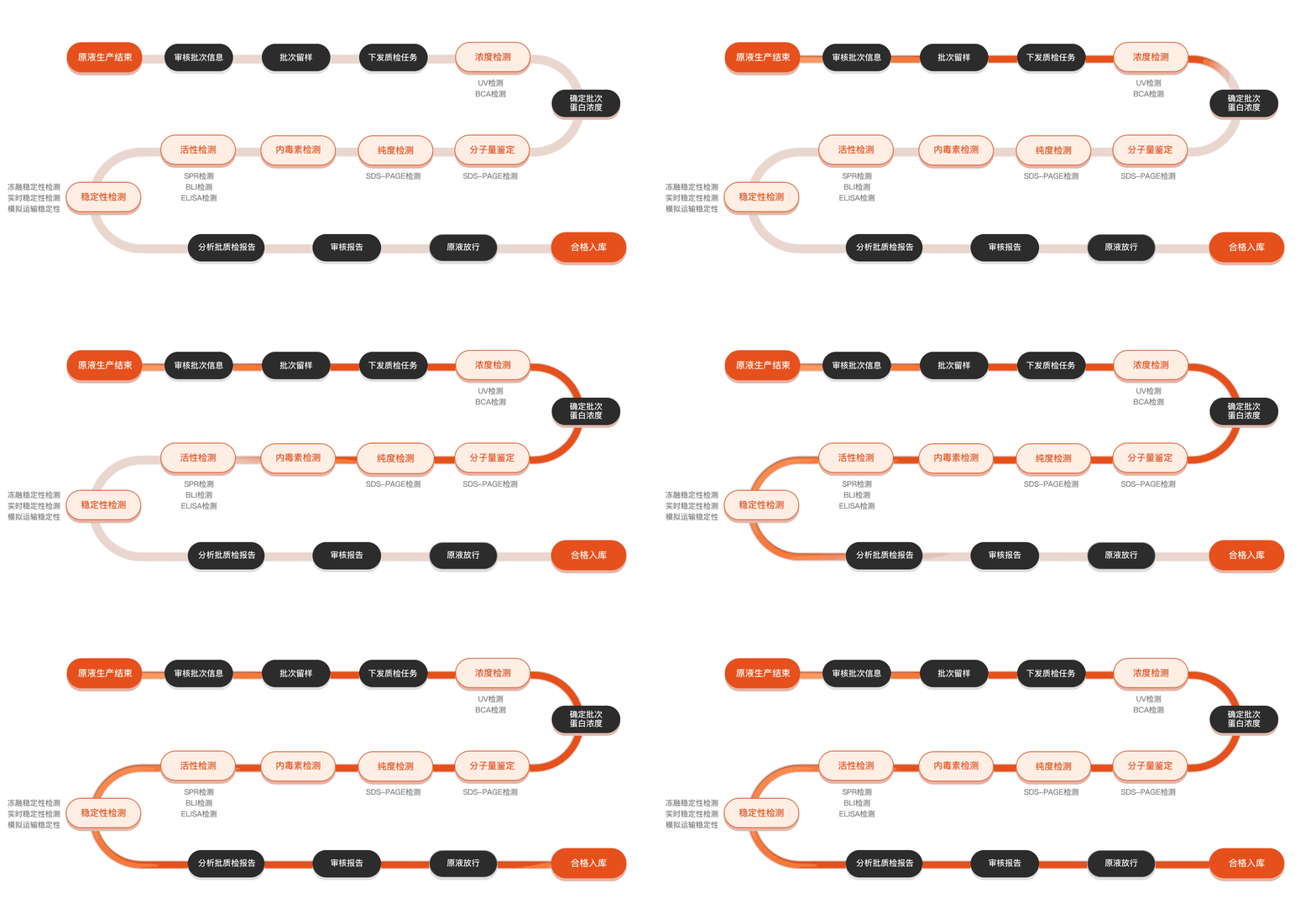
质检流程
相关产品
背景信息
CGB7 is a member of the chorionic gonadotropin beta-subunit family, which plays a significant role in reproductive biology. This protein is primarily expressed in the placenta and is crucial for maintaining pregnancy by regulating hormone levels essential for fetal development. Recent studies have highlighted the importance of CGB7 in various reproductive disorders, as its expression levels can be altered in conditions such as preeclampsia and gestational trophoblastic diseases. Research into the recombinant production of CGB7 protein has gained traction, aiming to explore its potential therapeutic applications and to better understand its biological functions. By generating recombinant CGB7, scientists can study its structure-function relationships and interactions with other hormonal pathways, paving the way for novel diagnostic and therapeutic interventions related to reproductive health. Moreover, the availability of recombinant CGB7 facilitates the development of specific antibodies for use in clinical settings, enhancing our understanding of its role in pregnancy and related complications. Overall, the study of CGB7 recombinant protein not only sheds light on its biological significance but also opens up new avenues for clinical applications in reproductive medicine.