
关键信息
-
基因名
Ephrin-A4/EFNA4
-
简介
Ephrin-A4/EFNA4 proteins are cell surface GPI-binding ligands of Eph receptors that serve as critical mediators in a variety of cellular processes critical for migration, repulsion, and adhesion during neuronal, vascular, and epithelial development. As a promiscuous binder, Ephrin-A4 binds to Eph receptors on neighboring cells, stimulating contact-dependent bidirectional signaling to neighboring cells. Ephrin-A4/EFNA4 Protein, Mouse (HEK293, Fc) is the recombinant mouse-derived Ephrin-A4/EFNA4 protein, expressed by HEK293 , with C-hFc labeled tag.
- 应用
-
别名
rMuEphrin-A4, Fc; Ephrin-A4 ; EPH-related receptor tyrosine kinase ligand 4 ; Epl4; Eplg4; Lerk4
-
种属
Mouse
-
表达系统
HEK293
-
标签
C-hFc
-
纯度
Greater than 90% as determined by SDS-PAGE.
-
蛋白编号
O08542
-
表达区间
R27-G176
-
蛋白长度
Full Length of Mature Protein
-
分子量
53.0 kDa
-
内毒素
< 1.0 EU per μg protein as determined by the LAL method.
-
性状
Freeze-dried powder
-
缓冲液
PBS, pH7.4, containing 0.01% SKL, 1mM DTT, 5% Trehalose and Proclin300.
-
复溶方法
Reconstitute in ddH2O to a concentration of 0.1-0.5 mg/mL. Do not vortex.
- 个性化定制
-
稳定性测试
The thermal stability is described by the loss rate. The loss rate was determined by accelerated thermal degradation test, that is, incubate the protein at 37℃ for 48h, and no obvious degradation and precipitation were observed. The loss rate isless than 8% within the expiration date under appropriate storage condition.
-
保存条件 & 期限
Samples are stable for up to twelve months from date of receipt at -20℃ to -80℃. Store it under sterile conditions at -20℃ to -80℃. It is recommended that the protein be aliquoted for optimal storage. Avoid repeated freeze-thaw cycles.
-
运输条件
In general, recombinant proteins are supplied as lyophilized powder and shipped at ambient temperature. For bulk packages, the proteins are provided as frozen liquid and shipped with blue ice, unless otherwise requested by the customer.
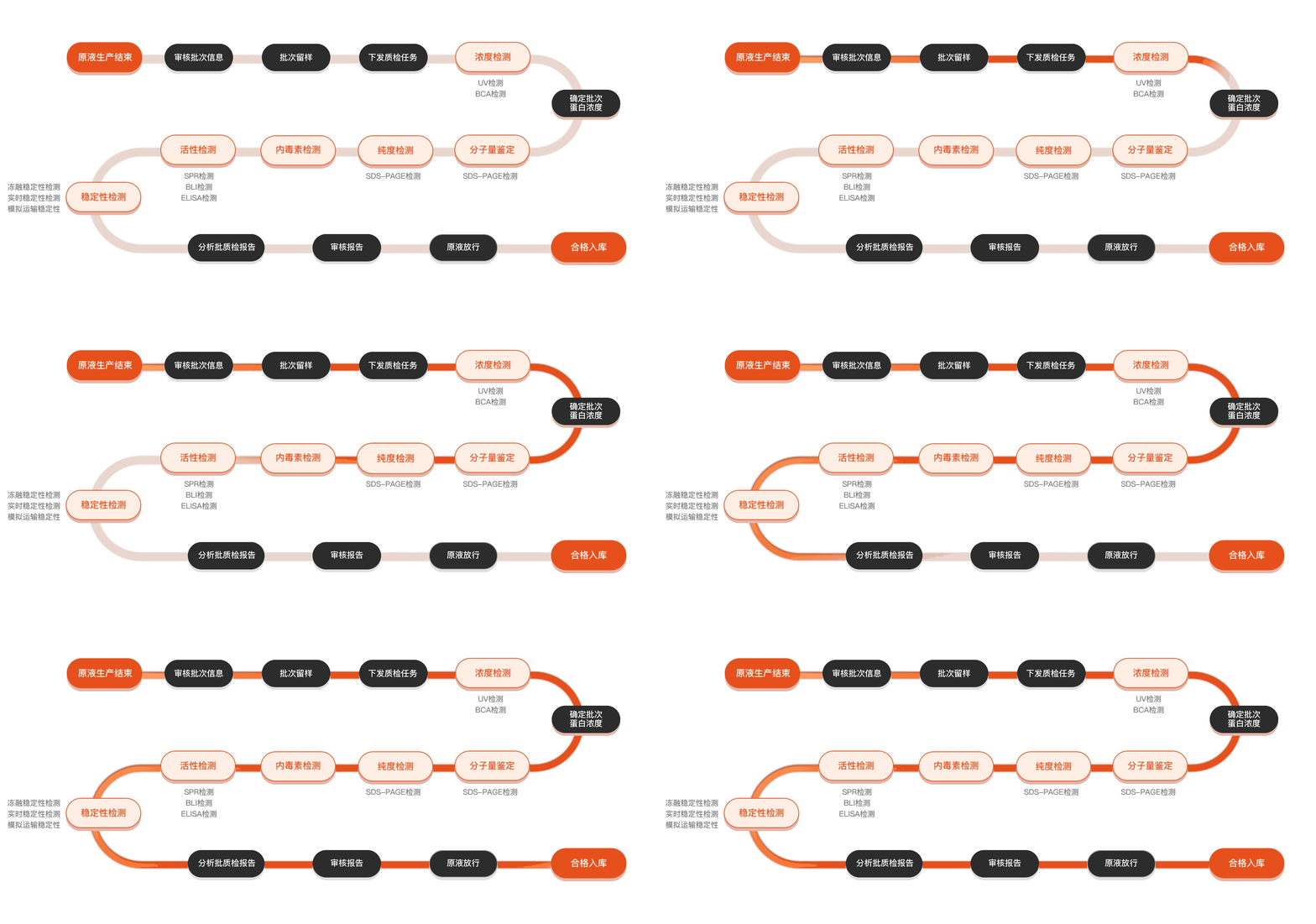
质检流程
相关产品
背景信息
Ephrin-A4 (EFNA4) is a member of the ephrin family, which plays a crucial role in cell communication, particularly in the development of the nervous system and cardiovascular structures. As a ligand for Eph receptors, Ephrin-A4 is involved in bidirectional signaling that regulates various biological processes, including cell migration, adhesion, and shape changes. Research has highlighted the importance of Ephrin-A4 in neurogenesis, where it influences axon guidance and neuronal positioning. Additionally, aberrations in Ephrin signaling have been linked to various pathological conditions, including cancer, where altered expression may affect tumor growth and metastasis. The recombinant protein form of Ephrin-A4 is critical for experimental studies, enabling researchers to investigate its interactions with Eph receptors and other cellular partners in vitro and in vivo. Such studies can elucidate its role in physiological and pathological processes and may offer insights into therapeutic targets for diseases associated with dysfunctional Eph-ephrin signaling. Understanding the functional dynamics of Ephrin-A4 through recombinant technology will advance our knowledge of its contributions to cellular behavior and provide a framework for exploring potential clinical applications.