
关键信息
-
基因名
HECTD2
- 应用
-
别名
FLJ16050; FLJ37306; HECD2_HUMAN; HECT domain containing 2; HECT domain containing protein 2 ; HECT domain-containing protein 2; Hectd2; OTTHUMP00000020086; OTTHUMP00000038605; Probable E3 ubiquitin protein ligase HECTD2; Probable E3 ubiquitin-protein ligase HECTD2
-
种属
Human
-
表达系统
E. coli
-
标签
His tag N-Terminus
-
纯度
Greater than 90% as determined by SDS-PAGE.
-
蛋白编号
Q5U5R9
-
表达区间
1-776aa
-
氨基酸序列
MSEAVRVPSP ATPLVVAAPA PEERKGKESE REKLPPIVSA GAGATAGLDR GAKGQISTFS SFISAVSPKK EAAENRSSPA HLVFPNIKNV REPPPICLDV RQKQRTSMDA SSSEMKAPVL PEPILPIQPK TVKDFQEDVE KVKSSGDWKA VHDFYLTTFD SFPELNAAFK KDATASFNTI EDSGINAKFV NAVYDTLLNT PQDVQKTVLK GIINSLLREW KGPRTKDDLR AYFILLQNPQ FNNTSTYVIY AHLLRQIATL VEADHHFLVH WFKKLSQKRF KQLVERLLQF ISLRLFPAKP EEFPPITKCS WWIPSAAKVL ALLNTANNLV HPPLIPYTDF YNSTLDHIDL MEEYHTWQNF GNSHRFSFCQ YPFVISVAAK KIIIQRDSEQ QMINIARQSL VDKVSRRQRP DMNILFLNMK VRRTHLVSDS LDELTRKRAD LKKKLKVTFV GEAGLDMGGL TKEWFLLLIR QIFHPDYGMF TYHKDSHCHW FSSFKCDNYS EFRLVGILMG LAVYNSITLD IRFPPCCYKK LLSPPIIPSD QNIPVGICNV TVDDLCQIMP ELAHGLSELL SHEGNVEEDF YSTFQVFQEE FGIIKSYNLK PGGDKISVTN QNRKEYVQLY TDFLLNKSIY KQFAAFYYGF HSVCASNALM LLRPEEVEIL VCGSPDLDMH ALQRSTQYDG YAKTDLTIKY FWDVVLGFPL DLQKKLLHFT TGSDRVPVGG MADLNFKISK NETSTNCLPV AHTCFNQLCL PPYKSKKDLK QKLIIGISNS EGFGLE
-
分子量
88.1 kDa
-
内毒素
< 1.0 EU per μg protein as determined by the LAL method.
-
性状
Freeze-dried powder
-
缓冲液
PBS, pH7.4, containing 0.01% SKL, 1mM DTT, 5% Trehalose and Proclin300.
-
复溶方法
Reconstitute in ddH2O to a concentration of 0.1-0.5 mg/mL. Do not vortex.
- 个性化定制
-
稳定性测试
The thermal stability is described by the loss rate. The loss rate was determined by accelerated thermal degradation test, that is, incubate the protein at 37℃ for 48h, and no obvious degradation and precipitation were observed. The loss rate isless than 8% within the expiration date under appropriate storage condition.
-
保存条件 & 期限
Samples are stable for up to twelve months from date of receipt at -20℃ to -80℃. Store it under sterile conditions at -20℃ to -80℃. It is recommended that the protein be aliquoted for optimal storage. Avoid repeated freeze-thaw cycles.
-
运输条件
In general, recombinant proteins are supplied as lyophilized powder and shipped at ambient temperature. For bulk packages, the proteins are provided as frozen liquid and shipped with blue ice, unless otherwise requested by the customer.
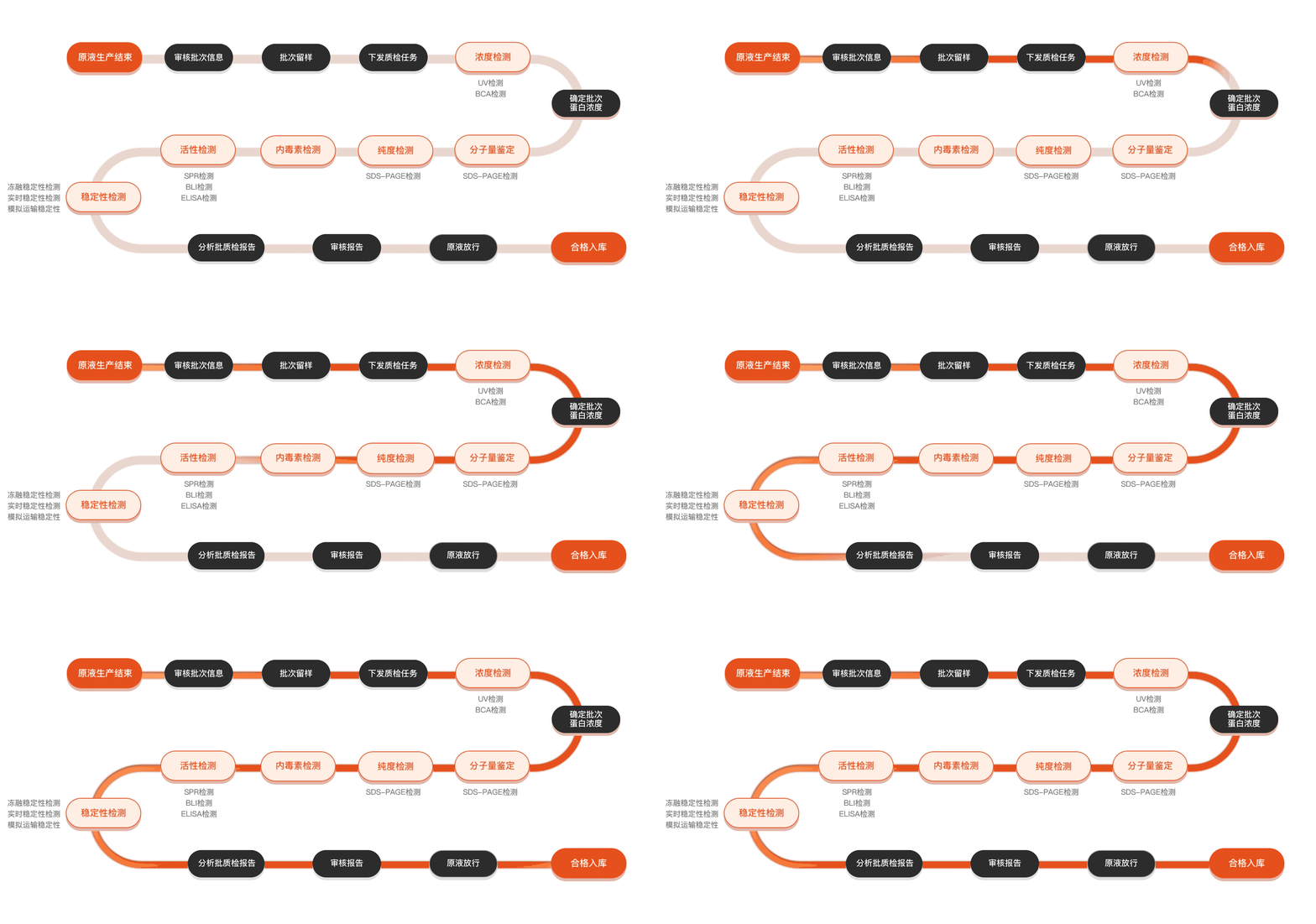
质检流程
相关产品
背景信息
HECTD2 (HECT domain E3 ubiquitin ligase 2) is an important member of the HECT E3 ligase family, which plays a crucial role in the ubiquitin-proteasome system by catalyzing the transfer of ubiquitin to target proteins. This post-translational modification is essential for various cellular processes, including protein degradation, signal transduction, and cellular response to stress. Recent research has suggested that HECTD2 is involved in multiple biological pathways, such as cell proliferation, differentiation, and apoptosis, highlighting its potential implications in various diseases, including cancer and neurodegenerative disorders. Notably, mutations or dysregulation of HECTD2 have been associated with pathological conditions, making it a promising target for therapeutic intervention. Understanding the structural and functional aspects of HECTD2, particularly through the study of its recombinant protein, can provide insights into its mechanism of action and regulatory roles in cellular contexts. Recombinant HECTD2 protein studies facilitate the exploration of its enzymatic activity, substrate specificity, and interaction with other cellular proteins, paving the way for novel strategies in disease treatment and understanding fundamental biological processes.